TR
 EN

What is a jersey design brief?
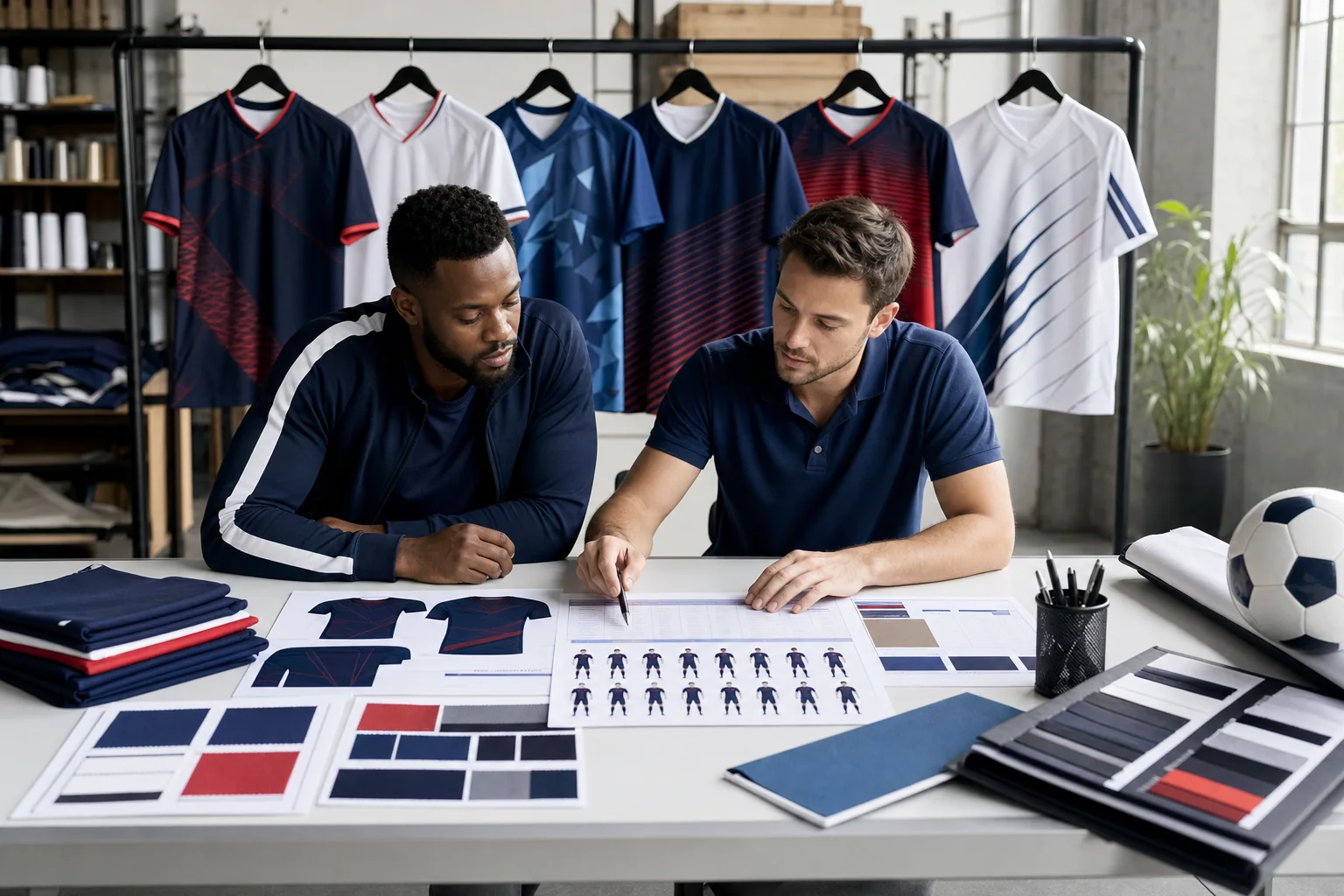
A jersey design brief is one organised document that explains the sport, team colours, garment model, logos, sponsors, player details and intended use to the design and production team. It replaces an open request such as “make us a nice blue kit” with clear fixed decisions and identifies which creative choices remain open. A good brief improves the first concept, reduces unnecessary revisions and helps approved artwork move safely onto the real garment pattern.
Explore Our Models


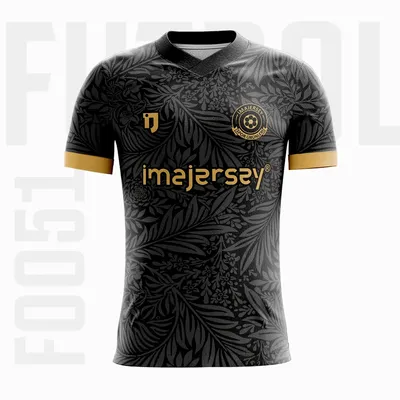
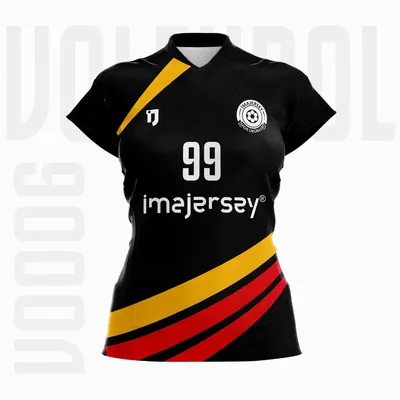
Use the custom jersey design area to explore visual options, or review the custom jersey production process for minimum quantities, personalisation and manufacturing stages. This guide is not an AI prompt list; it organises the practical information required by a human designer and manufacturer.
1. State the sport and intended use
Begin with the sport and the situation in which the kit will be used. Football, basketball, volleyball and handball use different cuts, sleeves, collars, side panels and number zones. A five-a-side tournament, school league, corporate event or full club season can also change the visibility and kit requirements.
- Sport and team level
- Match, training, tournament or promotional use
- Home, away or goalkeeper colour requirements
- Approximate date of use
Compare starting models in the football, basketball, volleyball and handball collections. Small-sided teams can also review the five-a-side kit collection.
2. Define the garment and kit contents
State whether you require a shirt only, a shirt-and-shorts set or another team garment. Include the model code when known. If no model has been selected, describe preferred collar, sleeves and fit. When attaching a product image, explain exactly whether the collar, panel structure, pattern or colour balance is the useful reference.
| Decision | Information to include | Why it matters |
|---|---|---|
| Garment | Shirt, full kit or teamwear | Defines artwork surfaces and quotation scope |
| Model | Model code or cut preference | Clarifies collar, sleeves and panel locations |
| Quantity | Total pieces and reserves | Affects minimum production and planning |
| Use date | Tournament or required date | Supports revision and production scheduling |
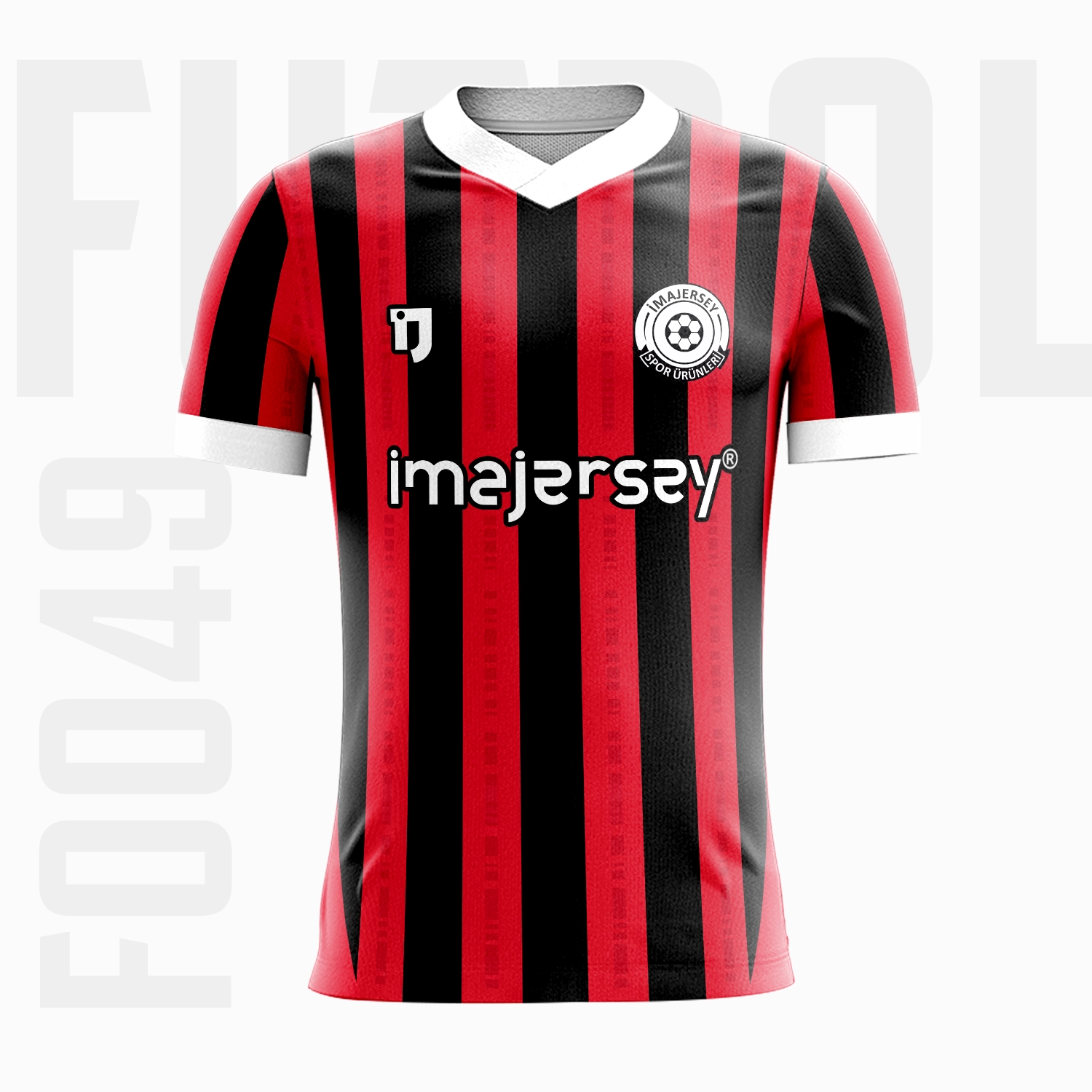
The F0037 football jersey, for example, can be used as a starting model. The brief should still say whether its panel balance, geometry, collar or colours are being referenced.
3. Separate primary, supporting and accent colours
“Blue and white” does not establish how much of each colour should be used. Define the dominant body colour, the supporting colour for sleeves or side panels and any limited accent. Add official HEX, RGB, CMYK or Pantone values when available, while remembering that fabric and screen appearance can differ.
- Primary: the largest garment area
- Supporting: sleeves, shoulders, side panels or shorts
- Accent: collar lines, thin stripes and small details
- Avoid: colours that conflict with an opponent, organisation or sponsor
The custom team jersey design guide explains how to turn colours into a consistent production-ready identity.
4. Supply clean crest and sponsor files
Send the team crest, sponsor marks and organisation logos from the cleanest source. Vector SVG, PDF, AI or EPS artwork is preferred. When only PNG or JPG is available, provide the highest-resolution version with a clean background.
List sponsor priority and preferred areas. Chest, back, sleeves and shorts do not offer unlimited space; using every sponsor at the same size can weaken the crest and player number. Review the logo, sponsor, name and number placement guide for hierarchy and production checks.
5. Explain every pattern or visual reference
A reference should guide the designer rather than request an exact copy. Note whether you like its stripe direction, gradient, geometry, simplicity or panel use. If several references are supplied, label the useful feature in each one.
An AI image can also communicate an idea, but text, logos, symmetry, rear view and seam continuity must not be assumed to be correct. Use the production-ready AI visual prompt guide for ideation, then include official artwork and exact wording in the final manufacturing brief.
6. Keep names, numbers and sizes in one table
Player data sent across separate messages increases spelling, size and duplicate-number risks. Keep print name, number, size, quantity and any shorts number in one approved table. Mark the final version clearly and ask one team representative to review it before artwork approval.
| Player | Print name | Number | Size | Qty |
|---|---|---|---|---|
| Example player 1 | ARDA | 10 | M | 1 |
| Example player 2 | DENIZ | 7 | L | 1 |
Use the jersey sizing and team distribution guide when preparing measurements. Confirm the total list and reserve requirements before requesting a quotation.
7. Mark decisions that remain open
A brief does not have to dictate every detail. Once fixed colours, crest and sponsors are listed, pattern density, supporting lines or typography can be left for design recommendations. Writing “open to designer recommendation” makes that freedom intentional.
Any compulsory wording, date, foundation year or slogan should be supplied as editable text with correct spelling. Do not expect the designer to transcribe important wording from a small image.
Example jersey design brief
Team: Example Sports Club
Sport and use: Football, seasonal match kit
Garments: Shirt and shorts, 16 outfield players plus 2 goalkeepers
Primary: Navy; supporting: white; accent: orange
Model: V-neck, short sleeve; F0037 only as a panel-balance reference
Crest: Vector PDF attached; left chest preferred
Sponsors: Main sponsor on front, second sponsor below back number
Names and numbers: One attached table; white and readable at distance
Goalkeeper: Same identity with light-green primary colour
Open decisions: Accent lines and typography recommendation
Common brief mistakes
- Sending unrelated references without explaining the useful feature
- Using a small screenshot instead of the source crest
- Failing to separate primary and supporting colours
- Updating player details across separate messages
- Omitting shorts, goalkeeper kit or the rear view
- Sharing the tournament date only after artwork approval
- Failing to separate fixed requirements from open creative choices
Final submission checklist
- Are the sport, garment and total quantity stated?
- Are primary, supporting and excluded colours clear?
- Are clean crest and sponsor files attached?
- Is the useful feature of every reference explained?
- Are player names, numbers and sizes in one table?
- Are goalkeeper and shorts requirements included?
- Are the use date and responsible contact stated?
Frequently asked questions
Can we prepare a brief without drawing the jersey?
Yes. Written requirements, colour references, logo files and preferred models provide a strong starting point. Technical kit artwork can then be prepared for production.
Does an AI image replace the brief?
No. It is a visual reference. Official logos, exact wording, rear details, player data and the selected model must still be supplied.
Are official colour codes mandatory?
No. They are helpful when available; otherwise provide clear examples and light-dark preferences.
How many different concepts should we request?
This depends on the service scope. One coherent brief is normally more useful than requesting many unrelated concepts.
Can the brief change later?
Revisions are possible before final approval and production. The approved artwork and player list should be checked again after any change.
Turn a design idea into production-ready information
A strong brief does not remove creative freedom. It protects the team information that must remain fixed and gives the designer useful boundaries. When your sport, colours, artwork and squad list are ready, contact imajersey to review design and production suitability.