TR
 EN
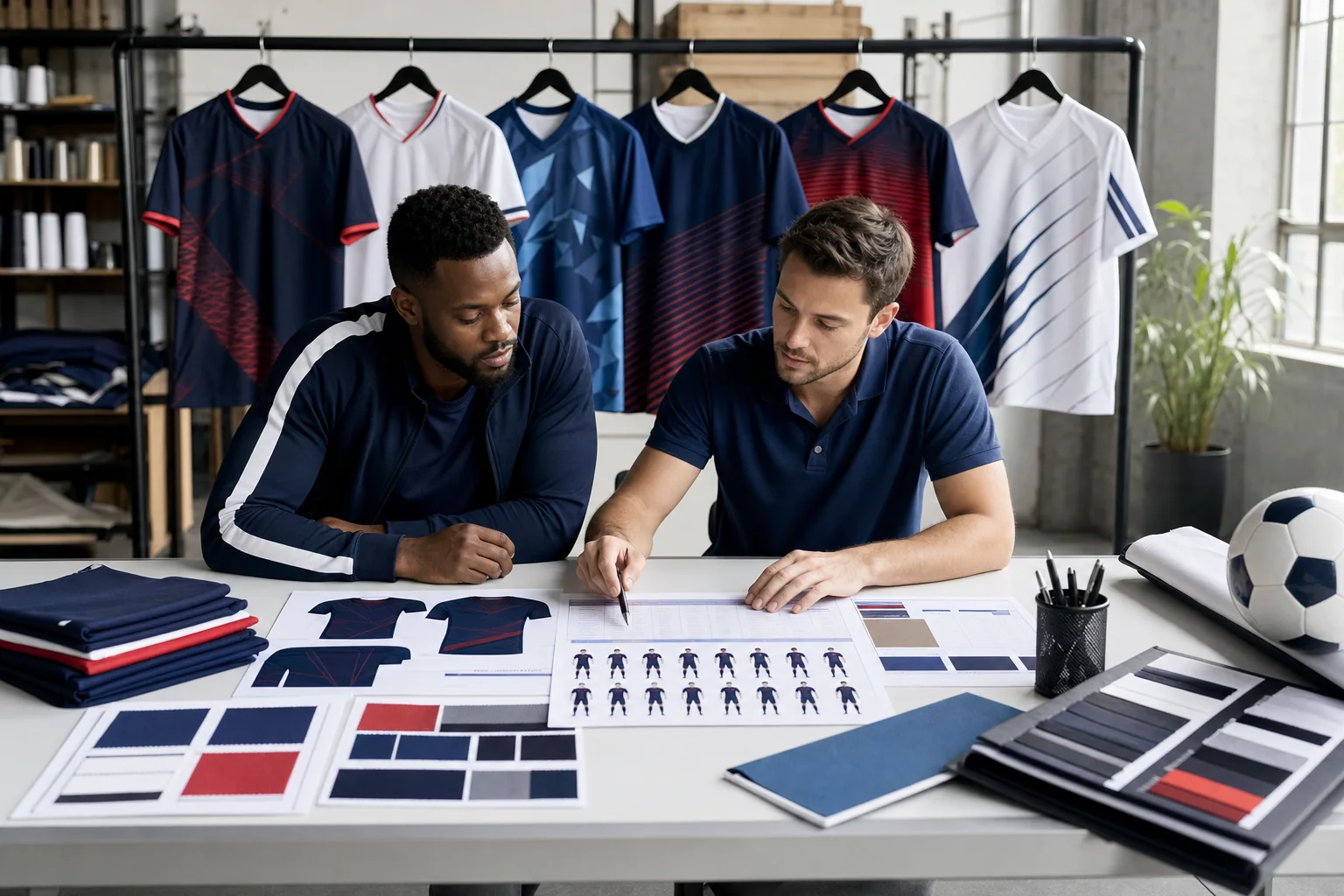
How do you build a custom team jersey design?
A custom team jersey design is more than a colour and pattern choice. It turns the team identity into a system that remains readable on the field and practical in production. The badge, primary colour, supporting colour, numbers, sponsors, garment cut and fabric must work together. A concept that looks attractive from the front can still fail when the back, side panels and seams are ignored.
Explore Our Models


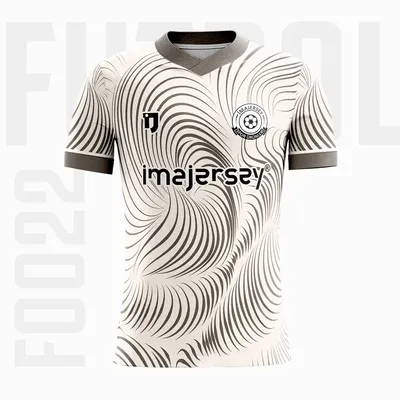
Use the custom jersey service to begin a project, or compare active football, basketball, volleyball and handball kits. This guide focuses on visual identity and production-ready design decisions rather than repeating the ordering process.
What makes a jersey specific to one team?
A custom jersey is not simply a stock shirt with a badge added. Colour ratios, pattern direction, collar and sleeve details, space around the crest, name and number typography and sponsor order form one identity. Without shared rules the shirt becomes crowded; with a system the team remains recognisable from a distance.
- One dominant team colour
- One supporting colour
- A restrained accent colour
- A readable name and number system
- Sponsors that do not overpower the crest
- Panels suited to the movement and cut of the sport
Choose primary, supporting and accent colours
The primary colour should carry most of the garment. A supporting colour can structure shoulders, sleeves, side panels or shorts. Use the accent for collars, thin lines and small details. Giving every colour equal weight weakens the focal point.
Review contrast beyond the design screen. Check the crest and numbers on light and dark backgrounds, visibility under floodlights and separation from common opponent colours. Reduce pattern density behind the back number.
Create a badge and sponsor hierarchy
The team crest is the central identity element. Sponsors should remain visible without competing with it. Set priorities for chest, back, sleeve and shorts positions, leave clear space around every mark and avoid seams and collar joins.
Supply vector SVG, PDF, AI or EPS artwork where possible. Save official colour values and single-colour alternatives. The logo, sponsor, name and number placement guide provides further checks.
How does the sport change the design?
One graphic cannot be transferred unchanged to every sport. Football balances sleeves, body and shorts. Basketball uses a sleeveless cut and broader side panels. Volleyball requires clarity around fast shoulder movement, while handball needs strong contrast during contact.
| Sport | Design priority | Key area |
|---|---|---|
| Football | Long-distance number clarity | Back panel, sleeves and shorts |
| Basketball | Vertical balance on a sleeveless cut | Side panels, neckline and large numbers |
| Volleyball | Simple visibility in quick movement | Shoulders, sleeves and chest sponsors |
| Handball | Strong contrast during contact | Body panels and goalkeeper separation |
Continue patterns across panels safely
A jersey design includes front, back, sleeves, side panels and shorts. When a line or geometric shape crosses a seam, production tolerance must be considered. Do not place a critical symbol directly across two panels. Allow safe overlap in repeating graphics.
The shorts should support the shirt rather than copy every detail. A simplified version of the same colour and graphic language usually creates a stronger full kit.
Turn an AI or reference image into production artwork
AI images are useful for ideas, but they often show only the front and ignore real pattern pieces. Logos may change shape, text may be incorrect, sleeves may differ and graphics can break at seams. Treat the image as a reference, then rebuild it on the actual garment template.
Review the common AI jersey design mistakes before approval. Official logo and text files should be supplied separately.
Plan variable player names and numbers
The team design is fixed while player information changes. Name, back number and shorts number areas should accommodate different name lengths. Highly decorative or narrow typefaces can reduce clarity at small sizes.
Keep player name, number, size and quantity in one table. The team sizing and measurement guide helps build the list.
Production-ready design checklist
- Are primary, supporting and accent colours final?
- Are high-quality crest and sponsor files available?
- Are front, back, sleeves and side panels shown?
- Does the number area remain clear?
- Is the pattern safe across seams?
- Does the artwork match the sport-specific cut?
- Do shorts and goalkeeper kit share the identity?
- Has one final player list been approved?
Use existing models as references
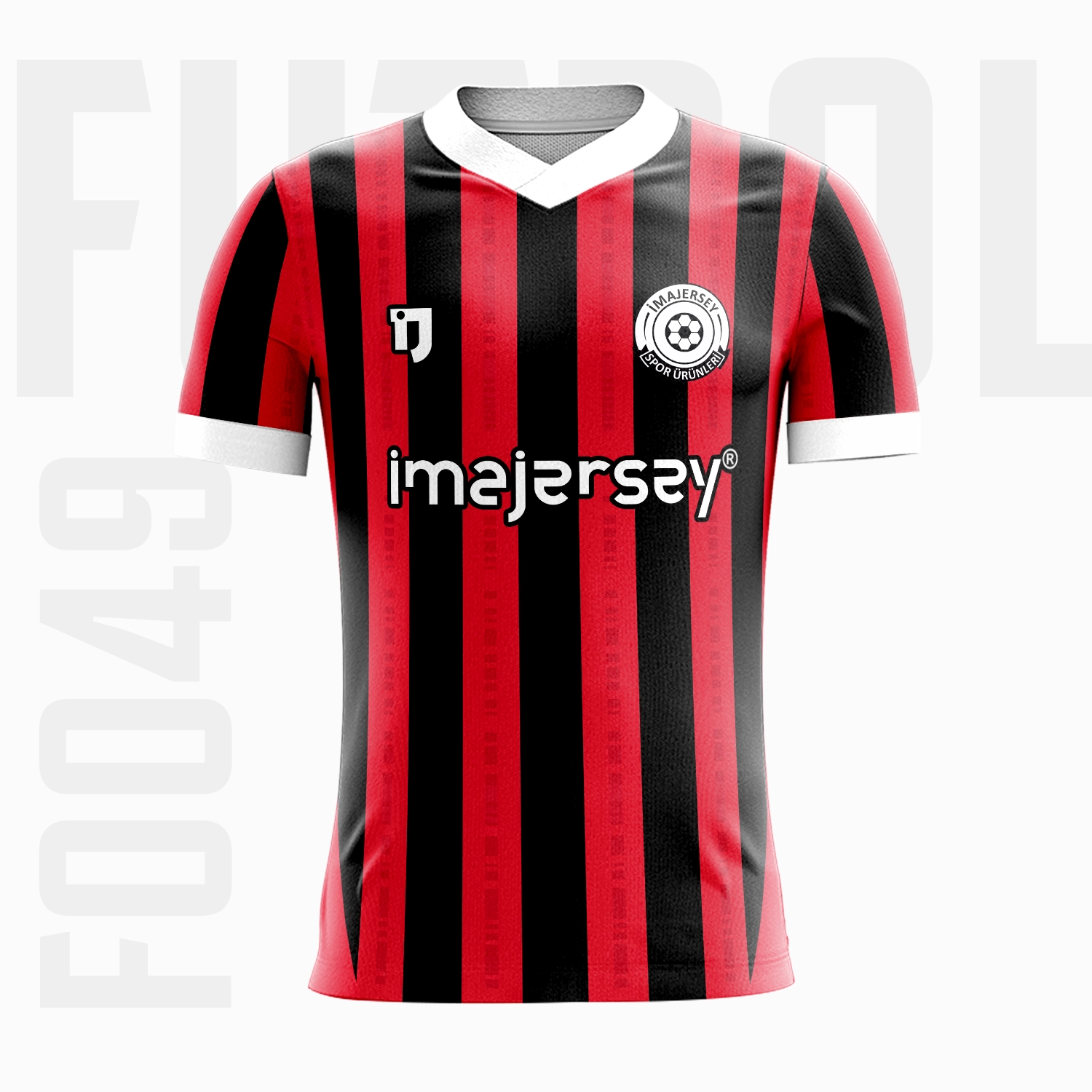
Compare colour balance, panel use and number zones instead of copying a model. The F0049 football kit demonstrates a strong vertical structure. Review the other sport collections to see how one identity can adapt to different garment cuts.
Frequently asked questions
Can production start from a front-view image?
It can be the initial reference, but the back, sleeves, side panels and shorts must be resolved before production.
Can one identity be used across several sports?
Yes. Colours and visual rules can remain consistent, while panels, collar, sleeves and number areas are rebuilt for each sport.
Can a sponsor be added later?
The approval artwork can be updated before production. The new size and position should be reviewed with the other elements.
Is a professional drawing required to begin?
No. A clear sketch, reference or AI concept can communicate the idea; technical production artwork is prepared separately.
Build a team identity that can be produced again
A strong custom jersey connects colours, crest and player data in a reusable system. When your concept, sport and squad list are ready, contact imajersey to review production suitability.